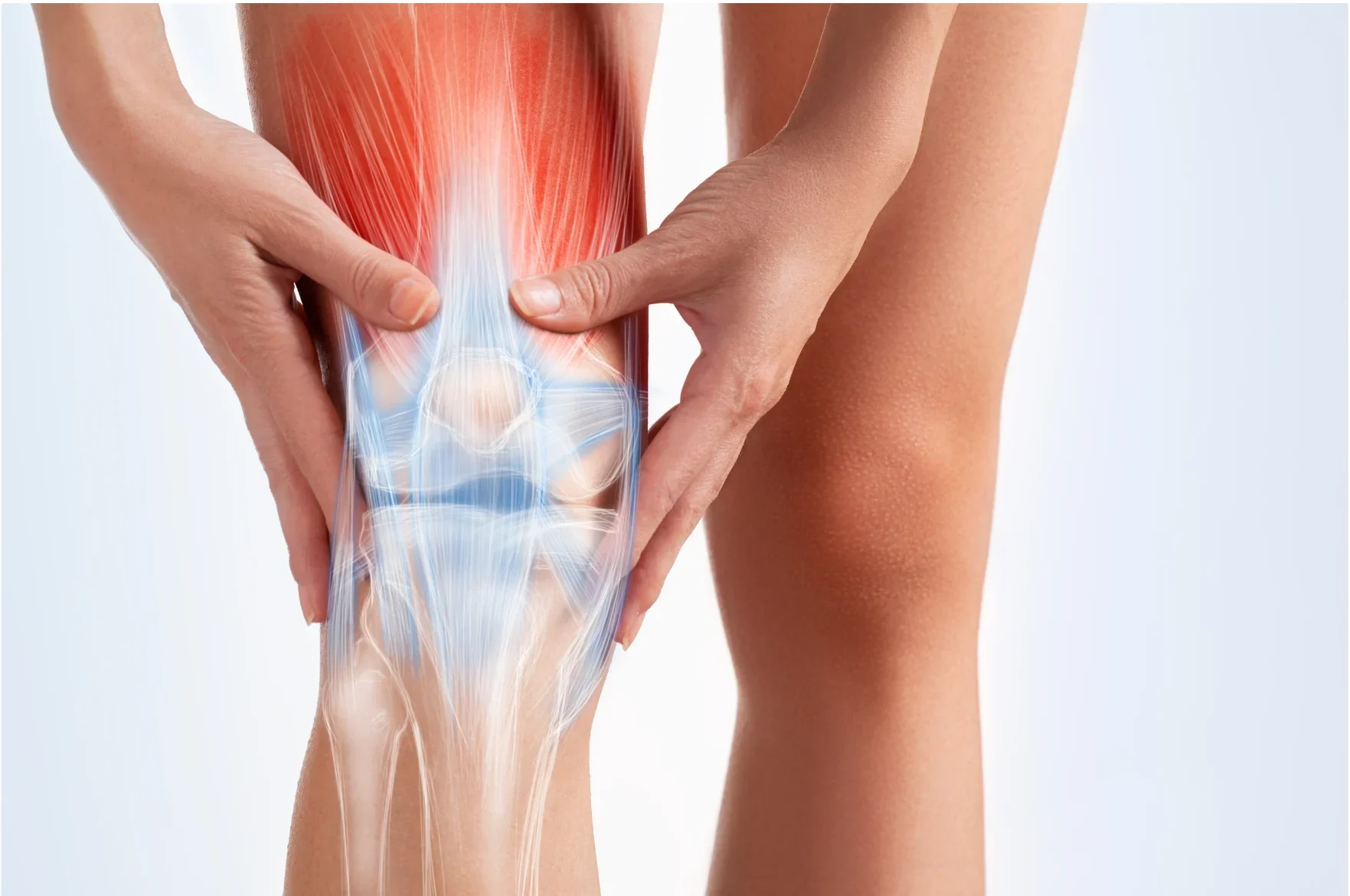
Crippling knee pain is truly an insidious thing, often forcing you to contemplate Total Knee Replacement (TKR) only after exhausting all other options. TKR is almost always considered the last resort when conditions have made the joint severely unworkable.
The Total Knee Replacement (TKR) procedure is generally considered when less invasive treatments have provided insufficient relief, offering a pathway toward restoring long-term mobility and function.
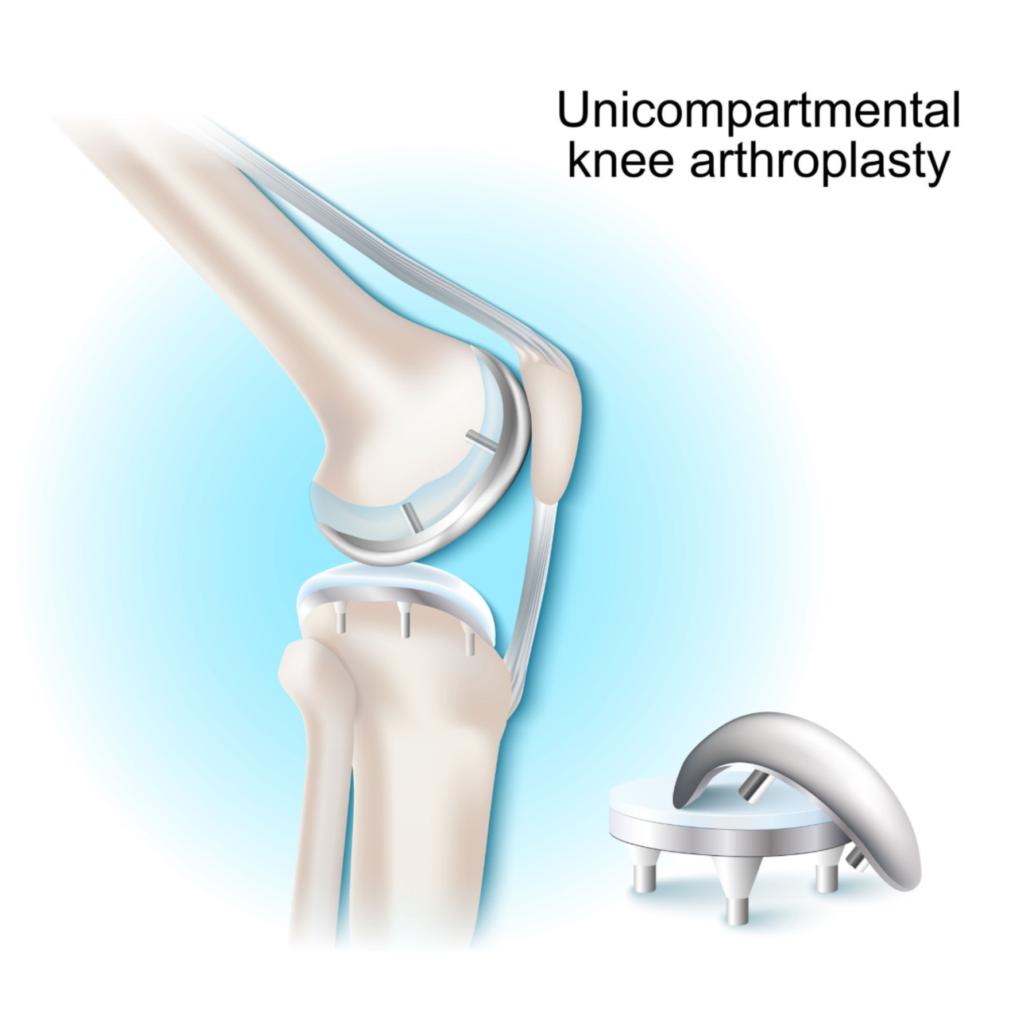
Think of your knee joint as a complex hinge. When the smooth cartilage that covers the ends of your bones wears away, this hinge becomes rusty and stiff, causing the bones to grind together painfully.
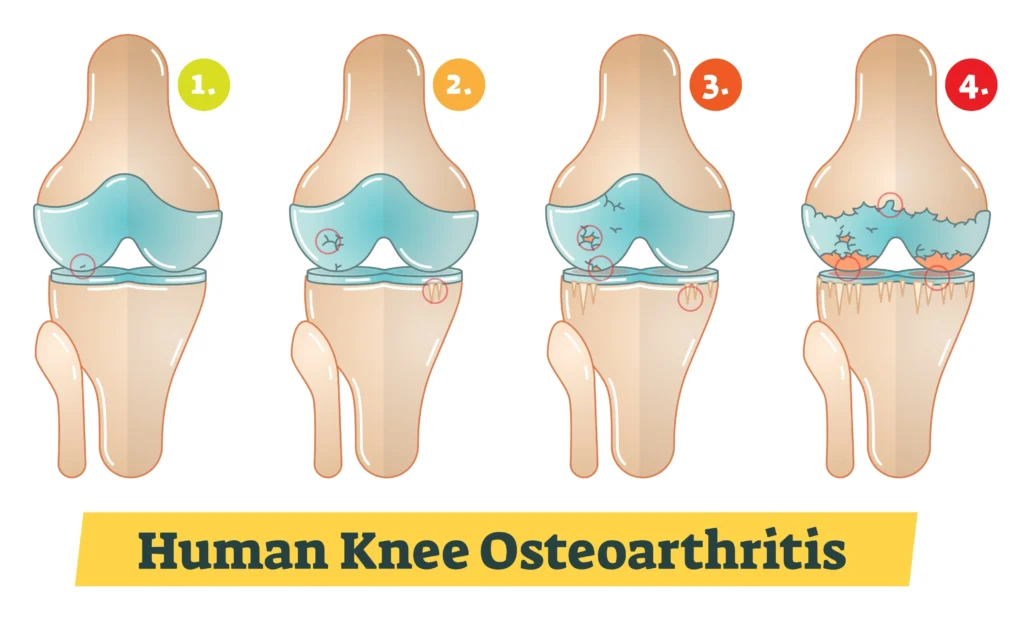
A total knee replacement is, at its core, a resurfacing procedure. It is not about removing your entire knee joint, but rather replacing only the damaged surfaces. An orthopaedic surgeon carefully removes the worn-out cartilage and a small amount of underlying bone from the end of your thighbone (femur) and the top of your shinbone (tibia). These surfaces are then “capped” with high-grade metal implants. A medical-grade plastic spacer is inserted between them to act as new cartilage, allowing the joint to glide smoothly and without pain.
The decision to have a TKR is not based on age alone but on an individual’s level of pain and disability. While most patients are between 50 and 80, the primary focus is on your quality of life.
You may be an ideal candidate for surgery if you experience:
Knee replacement is generally required when the joint surfaces are critically damaged, resulting in bone-on-bone friction and persistent pain, primarily due to severe osteoarthritis (OA) or other chronic conditions like rheumatoid arthritis.
By far, the most common reason for total knee replacement surgery is severe osteoarthritis (OA). This is often called “wear-and-tear” arthritis. Over a lifetime, the protective articular cartilage that cushions your knee joint gradually breaks down. As this cartilage thins, the bones begin to rub against each other, causing friction. The body may try to compensate by creating bone spurs, which can worsen pain and stiffness. This bone-on-bone contact is the source of the deep, aching pain and loss of motion typical of advanced OA.
While OA is the most frequent cause, other conditions can also destroy the knee joint.
It can be difficult to know when “bad knee pain” has become “bad enough” for surgery. The key is to assess your quality of life. It may be time to consult a specialist if:
Surgery is not the only option. We explore the full spectrum of non-surgical treatments that can manage knee pain and discuss the differences between a partial and a total knee replacement.
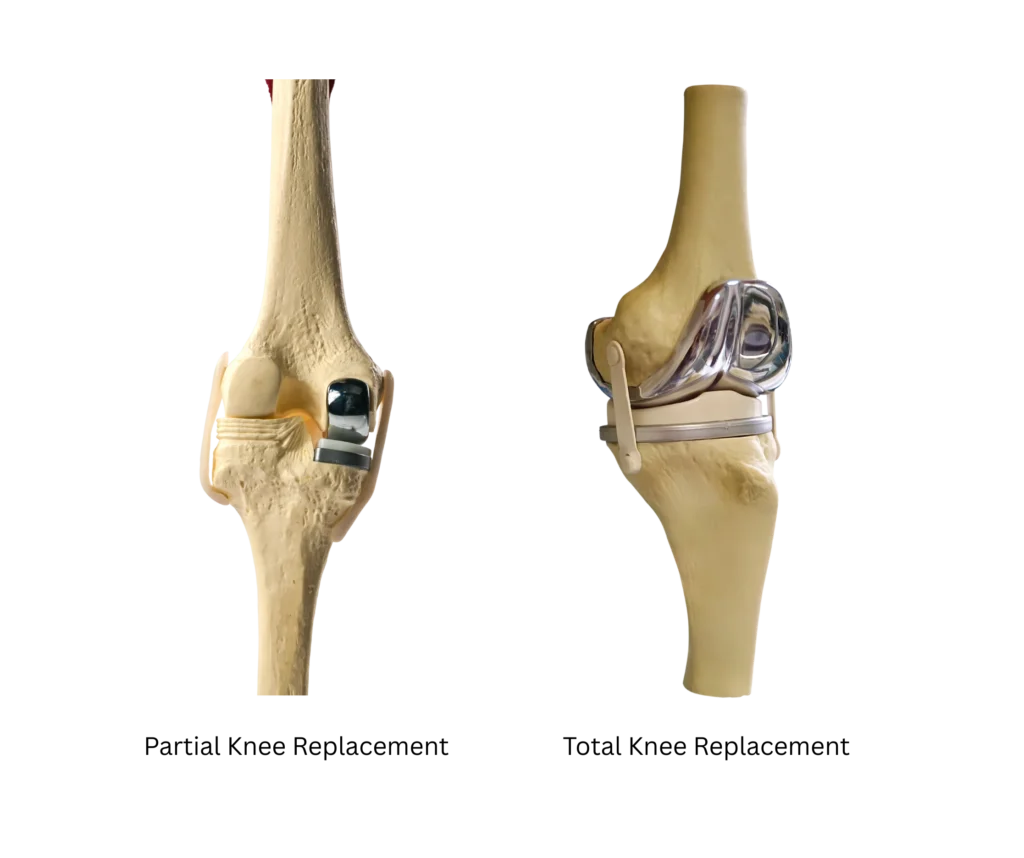
Your knee has three main compartments. In many patients, arthritis only affects one of these.
An orthopaedic specialist can determine the extent of your arthritis with a physical examination and X-rays.
Before recommending surgery, your orthopaedic specialist will always explore conservative treatment options. These methods can be very effective in the earlier stages of arthritis.
Understanding the recovery process helps set realistic expectations and prepares you for the journey ahead. Recovery from TKR is a staged process highly reliant on pain management and dedicated physical therapy.
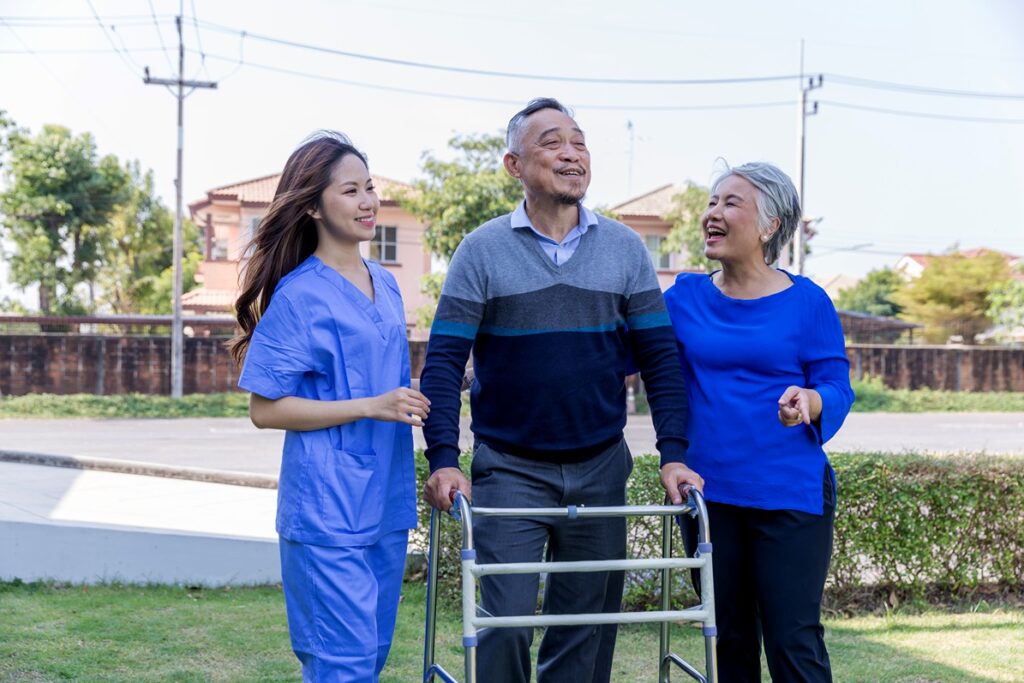
The immediate hours and days following your TKR are crucial for managing pain and initiating the joint’s function.
Returning to normal routines requires patience and a gradual transition away from walking aids.
The First 6 Weeks: Building Blocks
| Milestone | Expected Timeline | Details |
|---|---|---|
|
First Steps |
Day 1 |
With physiotherapist, using a walker or crutches. |
|
Walking Aid Use |
3 to 6 Weeks |
Use walker/crutches for full support and safety. |
|
Driving |
Typically 4 to 8 Weeks |
Depends on which leg was operated on (must be off strong pain medication). |
|
Desk Work |
2 to 4 Weeks |
Can return to sedentary work, ensuring frequent movement and leg elevation breaks. |
|
Milestones at 3 Weeks |
3 Weeks |
Staples/sutures removed, noticeable reduction in pain, and ability to walk for 10–15 minutes with aid. |
The long-term success of your surgery is defined by the quality of functional recovery and adherence to activity restrictions.
Benefits of TKR:
Key Considerations for Recovery:
Potential Risks:
Disadvantages and Restrictions:
We provide a transparent breakdown of the costs associated with total knee replacement in Singapore, including how to navigate Medisave, MediShield Life, and private insurance claims.
In Singapore’s private healthcare system, the total cost for a single Total Knee Replacement surgery typically ranges from SGD 35,000 to SGD 50,000. This all-inclusive estimate generally covers:
At your consultation, we will provide a detailed and itemised financial counselling sheet, so there are no surprises.
Medisave
Medisave can be used to pay for hospitalisation and approved surgical procedures, up to specific withdrawal limits. For example, a complex knee replacement is claimable up to a certain amount from the Table of Surgical Procedures.
MediShield Life
This is a basic health insurance plan that helps pay for large hospital bills and selected costly outpatient treatments.
Integrated Shield Plans (IPs)
If you have an IP from a private insurer, it works on top of MediShield Life. These plans are what cover the bulk of the cost if you choose to be treated in a private hospital or an A/B1 ward in a public hospital. It is essential to check your specific plan for coverage, deductibles, and any co-payment required.
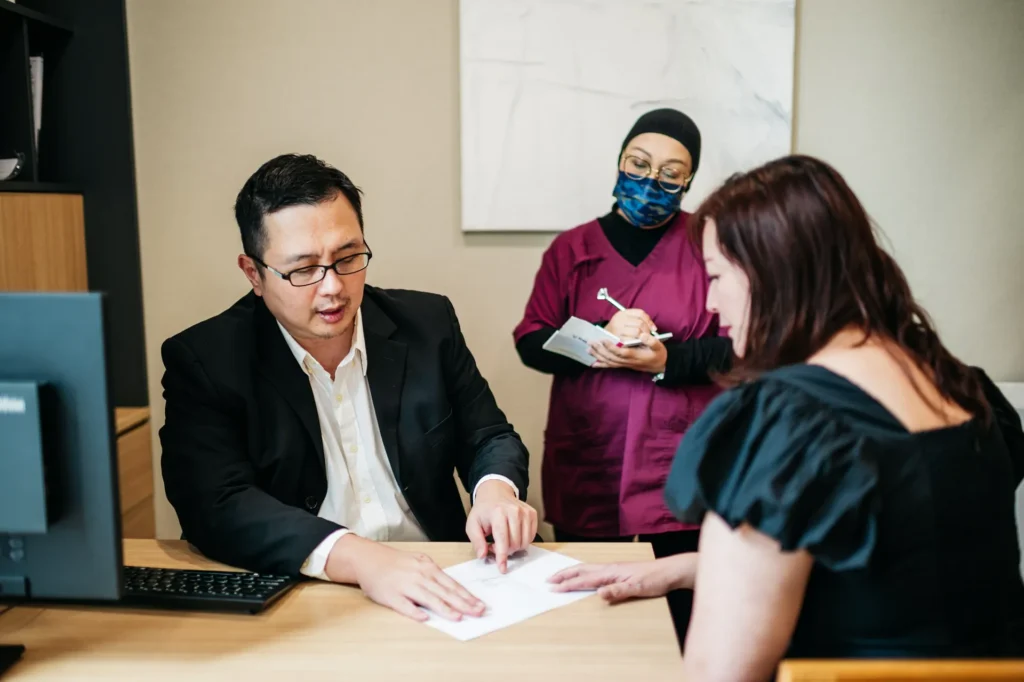
Dr Yong Ren brings extensive expertise to the field of minimally invasive orthopaedic procedures. His background includes specialist training in Switzerland, focusing on complex orthopaedic trauma and reconstruction, underscoring his capability in handling simple to highly complex joint issues.
Choosing us means you benefit from:
Dr Yong Ren’s practice prioritises the least invasive techniques, leading to smaller scars, less post-operative pain, and faster return to function.
We believe in treating the whole patient, not just the injury. This includes a full, multi-modal pathway from non-operative treatments (like physical therapy and injections) to the latest surgical techniques.
We provide clear, locally-relevant guidance on everything from the procedure itself to the intricacies of Medisave claimability and insurance processing in Singapore.
If you have been living with persistent pain, or if you have questions about your orthopaedic condition and wish to explore personalised, advanced treatment options, we encourage you to consult with Dr Yong Ren.
Take the first step toward a pain-free life with a $150 Knee Pain Consultation & X-ray.