
Suffering from sharp pain or instability along the inner side of your knee after a sports mishap or awkward fall?
You might be dealing with an MCL injury, a common yet debilitating knee sprain. Prompt and accurate diagnosis is crucial for a full recovery, especially in active individuals here in Singapore.
An MCL injury involves damage to the medial collateral ligament, a strong band of tissue on the inner side of your knee that prevents it from bending inward unnaturally. This ligament is essential for knee stability during everyday movements and athletic activities.
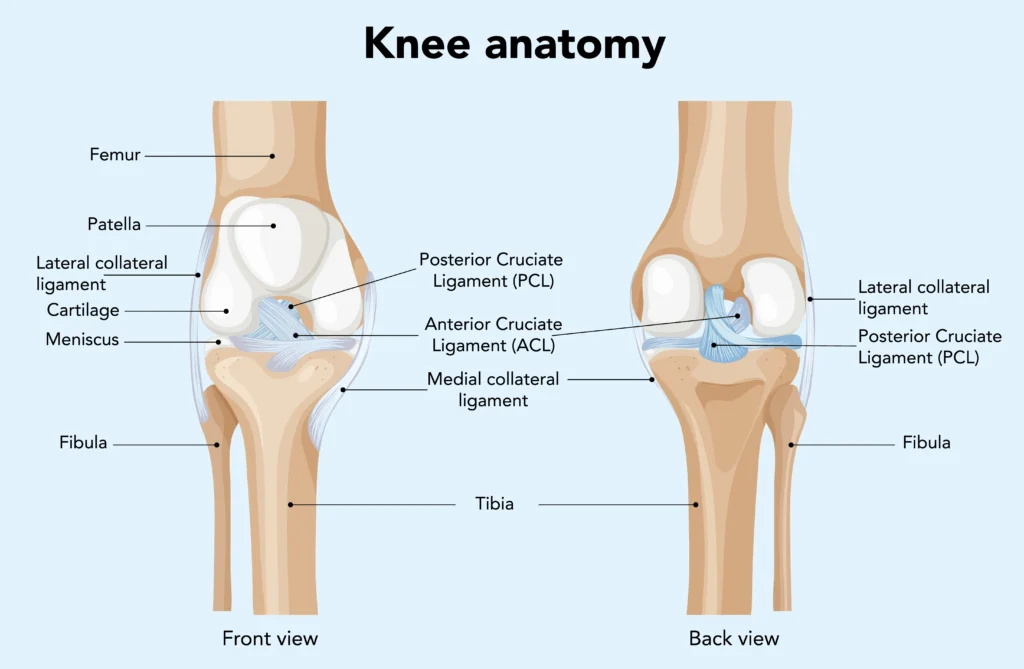
The knee joint relies on four key ligaments for stability: the Anterior Cruciate Ligament (ACL), the Posterior Cruciate Ligament (PCL), the Lateral Collateral Ligament (LCL), and the Medial Collateral Ligament (MCL). The MCL is situated on the inner side of your knee, running from the lower part of your thigh bone (femur) to the top of your shin bone (tibia).
Its primary function is to resist forces that push the knee inward—a motion known as valgus stress. Think of the MCL as the strong internal ‘door jamb’ preventing your knee from buckling or opening up excessively towards your other leg. Because it is an extra-articular ligament (outside the main joint capsule), it benefits from a relatively good blood supply, which often facilitates better healing compared to some other knee ligaments.
Not all MCL injuries are the same. Orthopaedic specialists classify MCL damage into three distinct grades, which dictate the recovery timeline and treatment plan:
It is very common for patients to confuse an MCL injury with damage to the ACL or meniscus cartilage, as symptoms can overlap. Differentiating them is critical for effective treatment.
| Feature | MCL Tear | ACL Tear | Meniscus Tear |
|---|---|---|---|
|
Primary Pain Location |
Inner (medial) side of the knee. |
Often felt deeper in the joint. |
Pain along the joint line; often sharp with twisting. |
|
Key Sensation |
Pain/tenderness on the inner aspect; possible buckling. |
Often a distinct ‘pop’ sound; major instability. |
Sensation of locking, catching, or the knee getting stuck. |
|
Instability |
Feeling of looseness or buckling inward. |
Feeling of the knee giving way during pivoting. |
Locking/catching sensation, limiting full straightening. |
While these distinctions are helpful, only an orthopaedic specialist performing specific physical tests (like the valgus stress test for MCL) and reviewing imaging can provide a definitive diagnosis and rule out other potential injuries.
MCL injuries don’t happen randomly. They result from specific mechanisms that place excessive stress on the inner knee structures, and understanding these causes can help you recognise when you’re at risk.
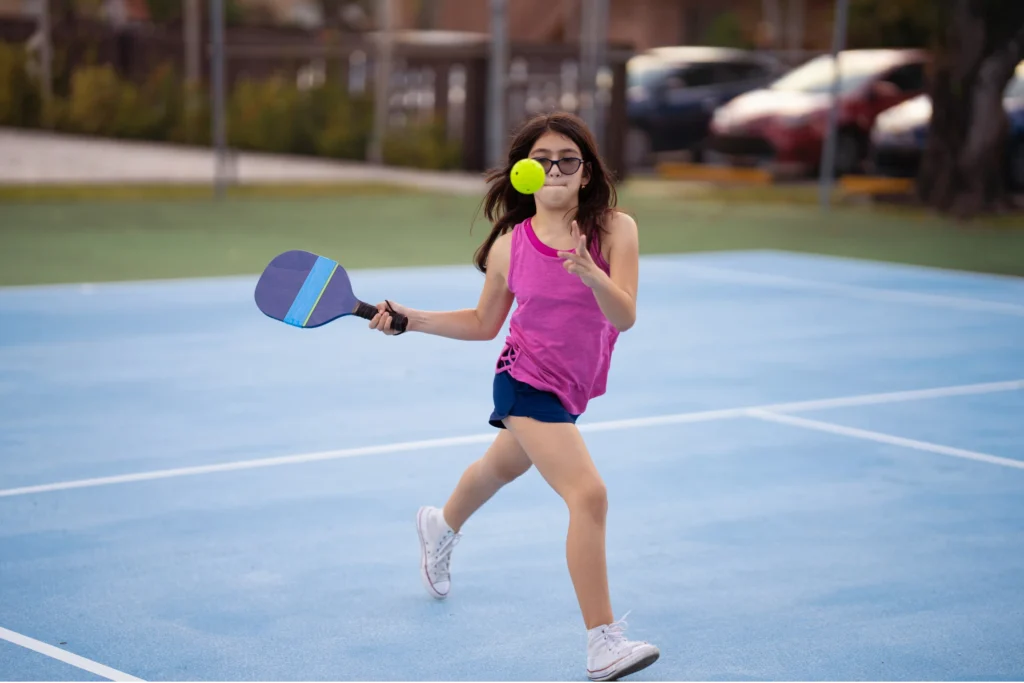
The most common cause of MCL injury is what specialists call “valgus stress”, a force that pushes the knee inward. This typically happens when something strikes the outer side of your knee whilst your foot remains planted on the ground. Picture a football player being tackled from the side, or a pickleball player landing awkwardly with their knee collapsing inward. Sharp pivoting movements with sudden direction changes can also overstretch the MCL. The ligament simply cannot handle the extreme sideways force, resulting in stretching or tearing of its fibres.
In Singapore’s active community, certain sports place the MCL under frequent duress. Contact sports are the highest risk due to direct impact, but non-contact pivoting sports also feature prominently:
If you suspect an injury, paying close attention to the immediate symptoms is vital for your specialist. The presentation varies by severity, but common indicators include:
The good news is that most MCL injuries heal successfully without surgery. Treatment approaches vary based on injury severity, your activity level, and whether other knee structures are damaged.
Yes, for many patients, the MCL injury can heal on its own, particularly Grade 1 and many Grade 2 tears. This is because the MCL has an excellent blood supply, unlike some other knee ligaments such as the ACL. The immediate, conservative treatment follows established protocols, often adapting principles that focus on protection, elevation, anti-inflammatories (as advised), compression, and exercise.
Physiotherapy is essential for a successful, long-term recovery. Once the initial pain subsides, the focus shifts to regaining full knee function. A structured rehabilitation programme, tailored by your specialist’s findings, prevents chronic instability.
Surgery for an isolated MCL injury is infrequent. Dr. Yong Ren typically reserves surgical repair or reconstruction for very specific scenarios:
Managing expectations regarding recovery time is a core part of patient care. The time taken to heal is directly related to the initial injury grade and your adherence to the rehabilitation protocol.
The MCL’s good blood supply generally means a faster healing trajectory compared to ligaments like the ACL. Here is a general guideline based on severity:
The healing process itself involves four key biological stages: inflammation, proliferation (new tissue formation), remodelling (tissue strengthening), and maturation. Successful recovery requires respecting each stage.
For most patients with a Grade 1 or even a well-managed Grade 2 MCL injury, walking without severe pain is possible relatively quickly, often with the use of crutches initially to avoid putting full weight on the injured inner side of the knee.
Dr Yong Ren brings extensive expertise to the field of minimally invasive orthopaedic procedures. His background includes specialist training in Switzerland, focusing on complex orthopaedic trauma and reconstruction, underscoring his capability in handling simple to highly complex joint issues.
Choosing us means you benefit from:
Dr Yong Ren’s practice prioritises the least invasive techniques, leading to smaller scars, less post-operative pain, and faster return to function.
We believe in treating the whole patient, not just the injury. This includes a full, multi-modal pathway from non-operative treatments (like physical therapy and injections) to the latest surgical techniques.
We provide clear, locally-relevant guidance on everything from the procedure itself to the intricacies of Medisave claimability and insurance processing in Singapore.
If you have been living with persistent pain, or if you have questions about your orthopaedic condition and wish to explore personalised, advanced treatment options, we encourage you to consult with Dr Yong Ren.
Take the first step toward a pain-free life with a $150 Knee Pain Consultation & X-ray.