The Orthopaedic and Pain Practice is MOH Medisave/Medishield Life accredited.
We are partnered with most insurance companies for Corporate & Personal (including integrated shield plans – IPs) Insurance Plans.
Patients can have their medical bills fully or partially covered by insurance and Medisave, depending on the type of insurance coverage and treatments conducted. We work alongside our patients and their insurance company to apply for the Letter of Guarantee (LOG) to have a cashless experience.
We work with the following insurance companies
Knee pain generally falls into three categories: acute injuries (trauma), degenerative diseases (chronic wear-and-tear), and inflammatory or overuse syndromes. Understanding which category your pain falls into is the first step toward effective treatment.
The way your knee pain started offers the first clue to its nature.
Early diagnosis prevents minor issues from escalating. For instance, a small meniscus tear left untreated can lead to accelerated cartilage damage and arthritis, eventually requiring more complex surgery that could have been avoided.
While some minor strains resolve with rest, pain lasting beyond 2–3 weeks despite home care requires an assessment. Ignoring structural damage like ligament tears can lead to permanent joint instability.
A meniscus repair involves suturing the torn tissue back together to preserve the natural shock absorber. A partial meniscectomy involves trimming away the damaged fragment. Repair is preferred for long-term joint health, while removal is used for tears with poor blood supply.
The Anterior Cruciate Ligament (ACL) is the primary stabiliser of the knee. A tear usually happens during sudden stops or pivots. For active individuals, ACL Reconstruction is often recommended, using a tissue graft to replace the torn ligament and restore stability.
Common signs include pain along the joint line, swelling, and a mechanical “locking” or “catching” sensation that prevents you from fully straightening or bending your leg.
OA is graded by the severity of cartilage wear. Early-stage OA involves intermittent pain during activity. Advanced-stage OA is marked by “bone-on-bone” friction, persistent pain, and significant stiffness that limits daily movement.
Weight management is one of the most powerful non-surgical tools. Every kilogram of body weight exerts several times that force on the knee during walking. Reducing weight directly decreases the mechanical stress on your cartilage.
Yes, especially in early stages. Management includes targeted physiotherapy to strengthen supporting muscles, weight loss, and the use of customised orthotics or offloading braces to redistribute pressure.
An osteotomy is a joint-preserving surgery for younger patients with early arthritis. It involves realigning the bone to shift weight away from the damaged side of the knee, delaying the need for a full replacement.
Diagnosis involves a clinical assessment by a specialist followed by weight-bearing X-rays to check for joint space narrowing. In complex cases, an MRI may be used to assess the specific state of the cartilage and ligaments.
Runner’s Knee (PFPS) is a broad ache around or under the kneecap, often caused by muscle imbalances. Jumper’s Knee (Patellar Tendinitis) is localised pain below the kneecap, specifically involving the patellar tendon.
R.I.C.E. stands for Rest, Ice, Compression, and Elevation. It is the foundational self-care strategy used immediately after an injury or flare-up to manage acute swelling and pain.
Physiotherapy focuses on corrective exercises. By strengthening weak muscles (like the glutes and hips), we can improve knee alignment and take the stress off the inflamed tendons.
This is often a sign of Patellofemoral Pain Syndrome (Runner’s Knee), where the kneecap does not track smoothly in its groove, causing irritation during movements that require deep knee bending.
It involves injecting a gel-like substance (HA) directly into the joint. It acts as a lubricant and shock absorber, mimicking the joint’s natural fluid to provide pain relief for several months.
PRP uses a concentration of your own platelets, which are rich in growth factors. When injected into an injured area, they can accelerate the body’s natural healing process for tendons, ligaments, and early arthritis.
ESWT is a non-invasive treatment that uses high-energy acoustic waves to treat chronic tendon pain. It stimulates blood flow and triggers a metabolic reaction to jumpstart healing in “stubborn” injuries like Patellar Tendinitis.
Yes. Advanced therapies using cells harvested from fat or bone marrow aim to potentially regenerate damaged cartilage or accelerate the healing of chronic injuries that haven’t responded to traditional care.
Injections are typically considered when physiotherapy and oral medications are insufficient to manage pain, or when a patient wants to delay surgery while remaining active.
It is a minimally invasive procedure where a small camera and instruments are inserted through tiny incisions. It’s used to repair menisci, remove loose bone fragments, and treat early-stage arthritis with minimal downtime.
A Total Knee Replacement (TKR) resurfaces the entire joint. A Partial Knee Replacement (PKR) only replaces the specific compartment that is damaged, preserving healthy bone and ligaments for a more “natural” feel.
Robotic technology allows for microscopic accuracy in bone cuts and implant positioning. This enhanced precision leads to better alignment, potentially improving the lifespan of the implant and speeding up recovery.
While it varies, modern techniques and robotic assistance allow many patients to begin walking shortly after surgery. Most return to normal daily activities within a few weeks, though full strength recovery takes a few months of rehab.
Most medically necessary knee surgeries are claimable via Medisave and private integrated shield plans. Our clinic provides clarity and assistance with insurance processing to ensure a smooth financial journey.
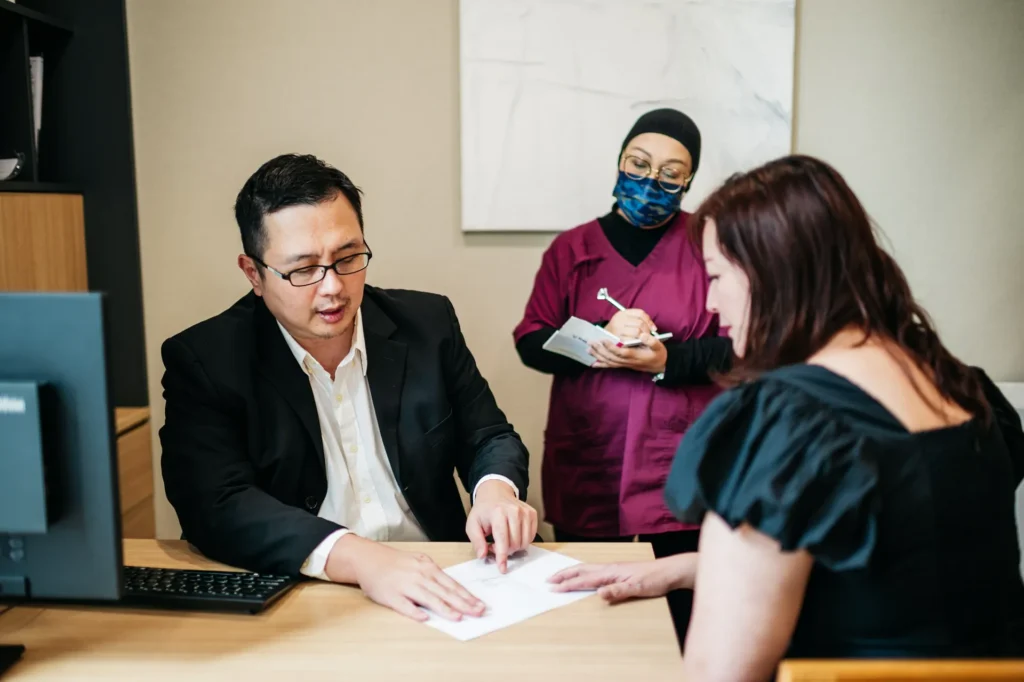
Dr Yong Ren brings extensive expertise to the field of minimally invasive orthopaedic procedures. His background includes specialist training in Switzerland, focusing on complex orthopaedic trauma and reconstruction, underscoring his capability in handling simple to highly complex joint issues.
Choosing us means you benefit from:
Dr Yong Ren’s practice prioritises the least invasive techniques, leading to smaller scars, less post-operative pain, and faster return to function.
We believe in treating the whole patient, not just the injury. This includes a full, multi-modal pathway from non-operative treatments (like physical therapy and injections) to the latest surgical techniques.
We provide clear, locally-relevant guidance on everything from the procedure itself to the intricacies of Medisave claimability and insurance processing in Singapore.
If you have been living with persistent pain, or if you have questions about your orthopaedic condition and wish to explore personalised, advanced treatment options, we encourage you to consult with Dr Yong Ren.
Take the first step toward a pain-free life with a $150 Knee Pain Consultation & X-ray.