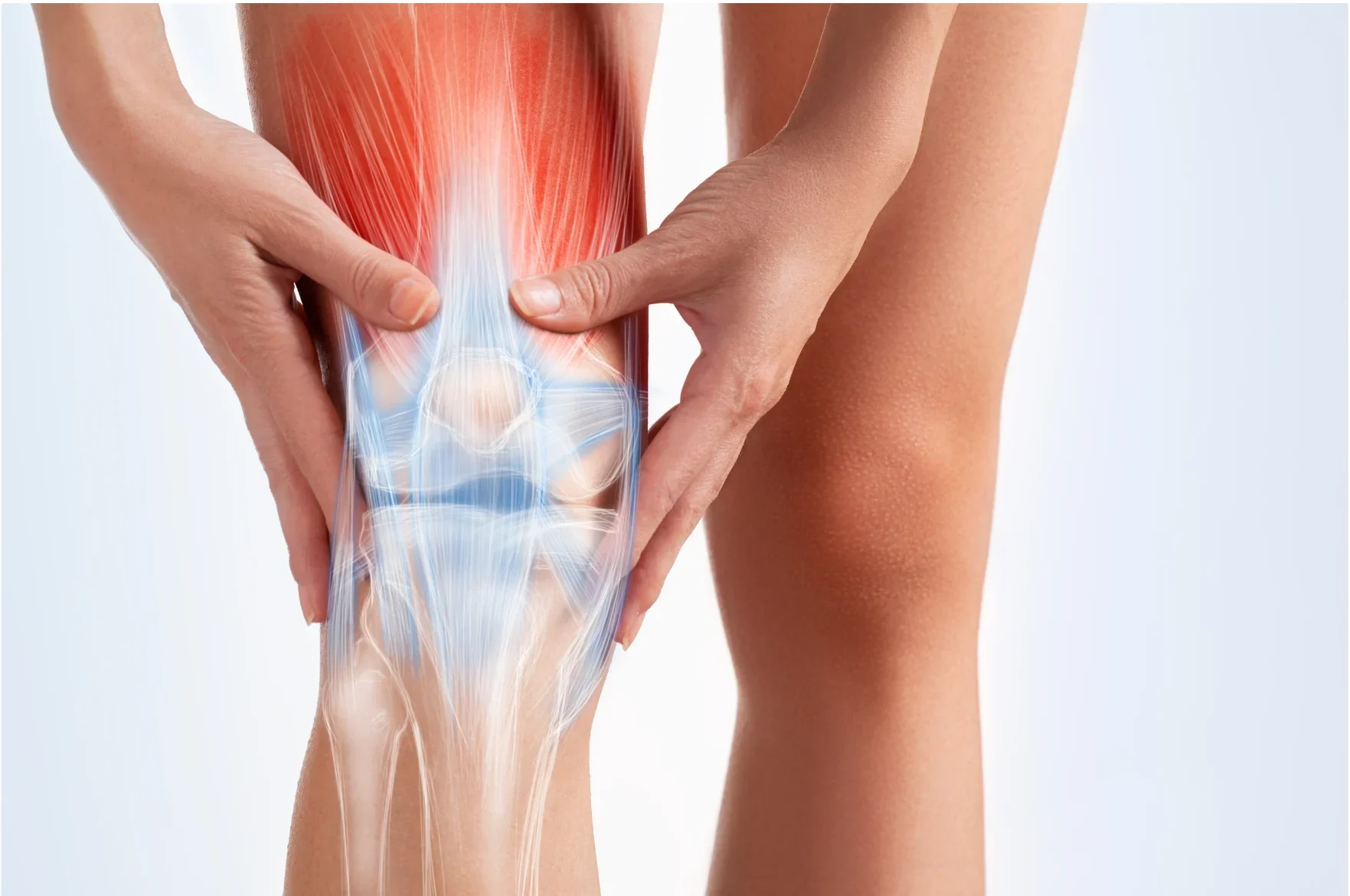
Did you feel a sudden, painful ‘pop’ in your knee during a weekend futsal game? Or perhaps you are dealing with a persistent swelling and clicking that just will not go down.
This could be a meniscus tear.
A meniscus tear can range from a minor issue to a severe condition that locks your knee joint.
Knowing the classic symptoms is the first step toward getting a prompt and accurate diagnosis.
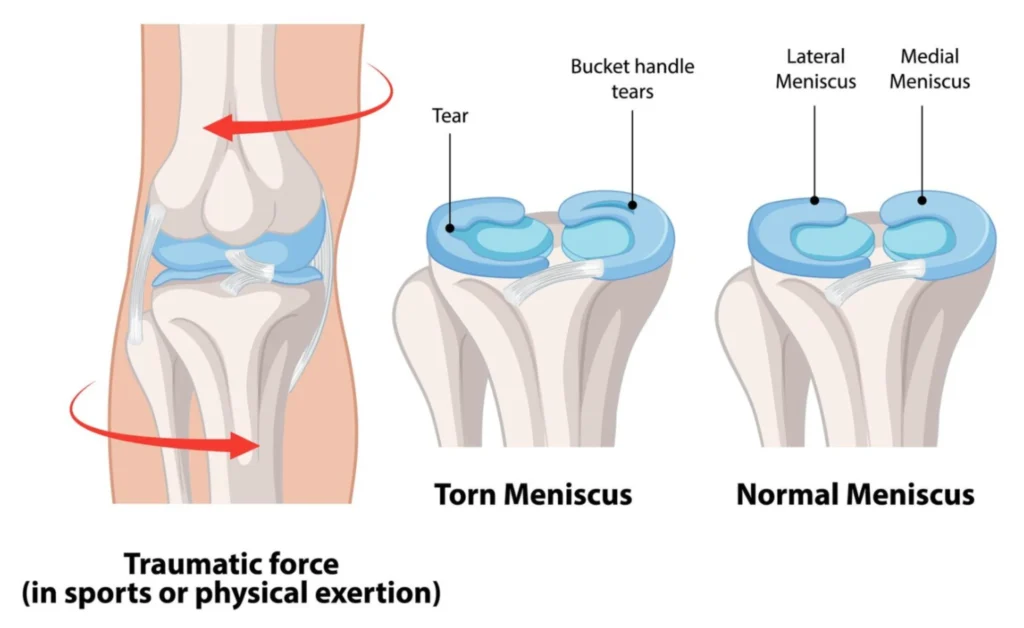
Many patients recall hearing or feeling a distinct pop or tear at the moment of injury, especially with an acute, traumatic tear.
A classic sign is localised pain along the joint line, on either the inner (medial) or outer (lateral) side of the knee. This pain often worsens with twisting, squatting, or going up and down stairs.
While not always immediate, swelling or stiffness typically develops over the course of several hours or the following day. This is caused by joint fluid buildup (effusion) reacting to the internal injury.
This is one of the most mechanically significant symptoms. A piece of the torn meniscus can get caught between the bones of the joint, causing the knee to suddenly lock or become jammed, preventing you from fully straightening it.
Your knee may feel unstable or suddenly buckle under your weight, as if it cannot support you.
A limited range of motion, particularly an inability to fully extend the leg, is common due to pain or the physical obstruction of the torn cartilage.
While these symptoms provide strong clues, they are not a conclusion. If your knee pain is severe, you cannot put weight on it, or it ‘locks’ and does not improve after a day or two of rest, it is time to see an orthopaedic specialist.
In Singapore, the diagnostic process is thorough. It begins with a clinical examination, where your doctor will discuss your symptoms, review your medical history, and assess your knee. They will check your range of motion, feel for joint line tenderness, and perform specific manoeuvres to check for a meniscus tear. To confirm the diagnosis, assess the tear’s size and location, and check for any other damage, your doctor will typically order an MRI scan. This scan provides a detailed, clear picture of all your knee’s soft tissues.
Understanding how the meniscus tear occurred is essential, as the cause often dictates the most appropriate treatment path. Tears can result from a sudden, forceful event or from gradual deterioration over many years.
In Singapore, we see many traumatic meniscus tears from high-impact and pivoting sports. These acute tears happen when you suddenly twist or rotate your knee while your foot is planted firmly on the ground. Think about a sharp cut during a basketball game, a sudden pivot in badminton, or a tackle in a weekend futsal match. These forceful movements can trap and tear the C-shaped cartilage.
This type of meniscus tear is often seen in younger, more active individuals under 40. It may also occur in combination with other knee injuries, such as an ACL tear, which is a common and more complex sports injury.
A meniscus tear is not just an injury for athletes. As we age, the meniscus cartilage naturally loses some of its water content and flexibility, becoming more brittle and weaker. From 40s and 50s onwards, a tear can happen from minimal force, sometimes from just getting up awkwardly from a chair or rising from a deep squat. These are known as ‘degenerative tears’.
They are a result of cumulative wear-and-tear over a lifetime. Often, the person cannot recall a specific event that caused the pain. Instead, the pain and swelling may have developed gradually over time.

If you suspect you have a meniscus tear, what you do next matters. Continuing with certain activities can make the tear larger, more complex, and potentially turn a simple tear into one that is more difficult to treat.
It is wise to avoid the following until you have a clear diagnosis:
Not all meniscus tears require surgery.
The possibility of natural healing for a meniscus tear depends almost entirely on the location of the tear, as this determines the blood supply to the injured tissue.
Ignoring a meniscus tear is not a recommended strategy. An untreated tear, especially a ‘flap’ or ‘bucket-handle’ tear, can move around within the joint. This loose fragment can catch between your bones, causing the knee to lock painfully.
More importantly, this unstable piece can scrape against the smooth articular cartilage on the ends of your bones, much like a pebble in a bearing.
This friction can lead to accelerated wear-and-tear and is a direct risk factor for developing osteoarthritis in the knee joint at an earlier age.
A tear may also become larger and less repairable over time.
R.I.C.E. is the initial emergency protocol, but a structured physiotherapy program is vital for long-term non-surgical recovery.
The R.I.C.E. method is the immediate, first-aid protocol used in the first 48 to 72 hours following an acute knee injury to manage swelling and pain:
However, physiotherapy is essential for non-surgical recovery. A structured rehab program goes beyond simply managing symptoms.
When conservative methods fail to alleviate pain, or when the tear is structurally unstable, surgery becomes the most reliable pathway to restoring function and preventing long-term damage.
A tear that is unstable, or that is causing your knee to lock, is a strong indicator that surgery is required.
Surgery is often indicated when the tear is severe, or when it impairs the basic function of the knee. Key signs that your meniscus tear requires surgical intervention include:
The surgical treatment for a meniscus tear is performed via knee arthroscopy (keyhole surgery), a minimally invasive technique. There are two primary options, chosen based on the tear’s location, size, and your age.
| Procedure | Description | Ideal Candidate & Tear Type | Long-Term Impact |
|---|---|---|---|
|
Meniscus Repair |
The torn edges are stitched back together to allow them to heal, preserving the meniscal tissue. |
Younger patients, acute tears in the vascular (“red”) zone. |
Benefit: Superior long-term outcome; significantly reduces the risk of future osteoarthritis. Risk: Requires a longer, cautious recovery (non-weight bearing) and has a small risk of the repair re-tearing. |
|
Partial Meniscectomy |
The small, damaged, and non-repairable portion of the meniscus is carefully trimmed and removed. |
Older patients, degenerative or complex tears in the non-vascular (“white”) zone. |
Benefit: Faster recovery and quicker return to activities; provides excellent symptom relief. Risk: Slightly increases the long-term risk of developing knee arthritis due to the permanent loss of cushioning tissue. |
This depends on your symptoms. If your knee is locked and you cannot straighten it, surgery is often needed urgently (within days or weeks) to prevent permanent damage to the cartilage. If your symptoms are intermittent pain and swelling, the decision is less urgent. You can trial a course of physiotherapy for 6-8 weeks.
However, waiting too long with a repairable tear can be detrimental. The tear may extend or get ‘chewed up’ by the joint, making it unrepairable. This can force a surgeon to perform a meniscectomy (removal) instead of a repair, which has different long-term implications.
Understand the financial aspect of treating a meniscus tear in Singapore. This section provides estimated costs for consultations, scans, physiotherapy, and surgical procedures in both public and private sectors.
Getting a diagnosis in the private system involves a few initial costs.
Specialist Consultation
An initial consultation with an orthopaedic specialist typically ranges from $150 to $250.
X-Ray
This is the first-line imaging test and is very affordable, usually costing between $80 and $150.
MRI Scan
If the specialist needs to see the soft tissues in high detail, an MRI may be ordered. This is more expensive, often ranging from $1,000 to $2,000 per joint.
Surgical costs vary based on the procedure (repair is often more complex than meniscectomy).
In private hospitals throughout Singapore, surgeon’s fees typically range from $10,000. Public hospital subsidised rates offer more affordable alternatives, though waiting times may be longer and choice of surgeon limited.
Medisave
Medisave can be used to pay for hospitalisation and approved surgical procedures, up to specific withdrawal limits. For example, a complex knee replacement is claimable up to a certain amount from the Table of Surgical Procedures.
MediShield Life
This is a basic health insurance plan that helps pay for large hospital bills and selected costly outpatient treatments.
Integrated Shield Plans (IPs)
If you have an IP from a private insurer, it works on top of MediShield Life. These plans are what cover the bulk of the cost if you choose to be treated in a private hospital or an A/B1 ward in a public hospital. It is essential to check your specific plan for coverage, deductibles, and any co-payment required.
Dr Yong Ren brings extensive expertise to the field of minimally invasive orthopaedic procedures. His background includes specialist training in Switzerland, focusing on complex orthopaedic trauma and reconstruction, underscoring his capability in handling simple to highly complex joint issues.
Choosing us means you benefit from:
Dr Yong Ren’s practice prioritises the least invasive techniques, leading to smaller scars, less post-operative pain, and faster return to function.
We believe in treating the whole patient, not just the injury. This includes a full, multi-modal pathway from non-operative treatments (like physical therapy and injections) to the latest surgical techniques.
We provide clear, locally-relevant guidance on everything from the procedure itself to the intricacies of Medisave claimability and insurance processing in Singapore.
If you have been living with persistent pain, or if you have questions about your orthopaedic condition and wish to explore personalised, advanced treatment options, we encourage you to consult with Dr Yong Ren.
Take the first step toward a pain-free life with a $150 Knee Pain Consultation & X-ray.