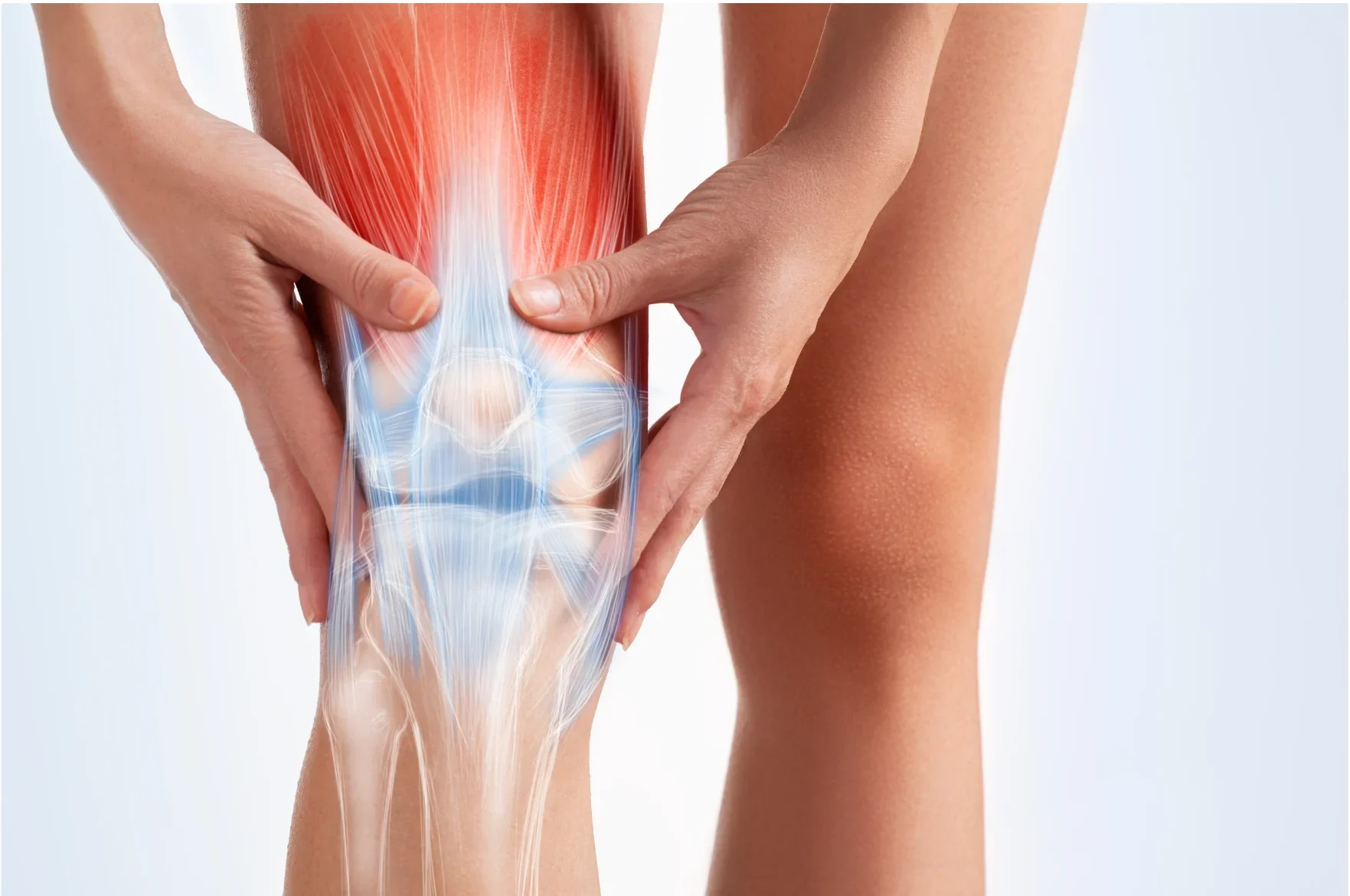
Have you ever felt a sharp, immediate pain in your knee followed by a terrifying “pop”? Perhaps your knee suddenly gave way during a quick pivot on the basketball court, or after an awkward landing. This experience often signals a serious injury, and for many active people in Singapore, it could be an ACL tear.
An ACL tear occurs when the anterior cruciate ligament (one of the key stabilising structures in your knee) becomes damaged through trauma or excessive force. Understanding the mechanics behind this injury helps you appreciate why proper treatment matters.
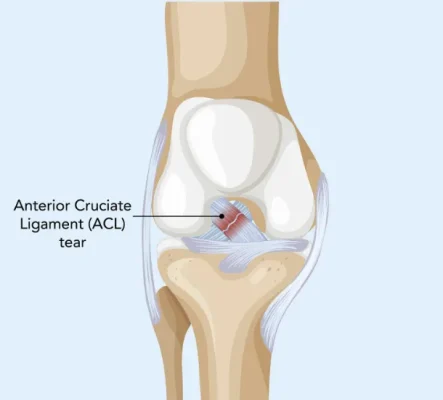
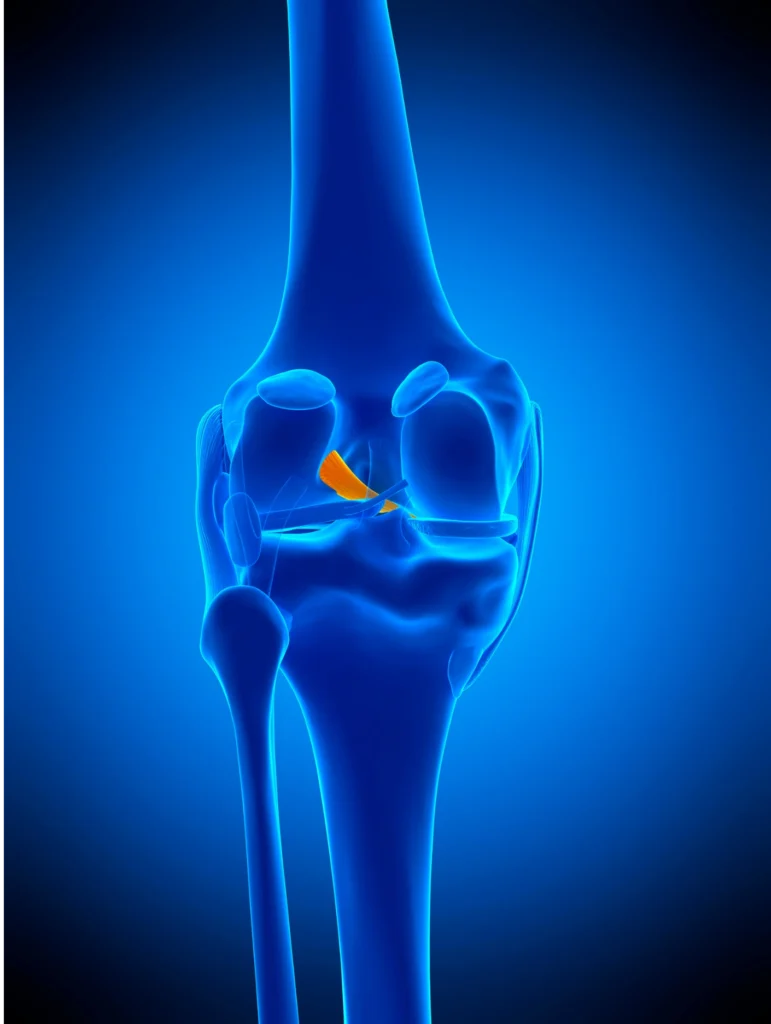
The Anterior Cruciate Ligament (ACL) runs diagonally through the centre of your knee joint, connecting your thigh bone (femur) to your shin bone (tibia). Think of it as a crucial rope that prevents your tibia from sliding too far forward and keeps your knee stable during twisting movements.
ACL tears are classified into three grades:
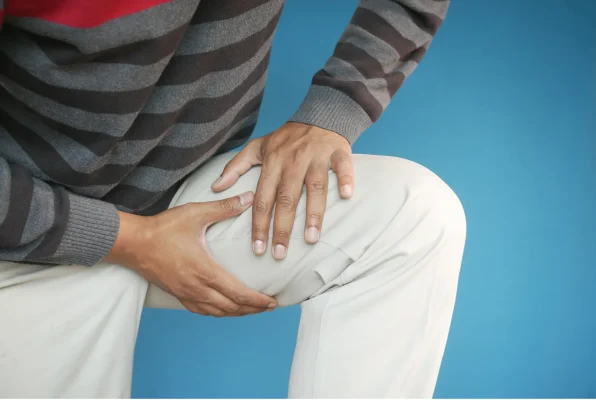
While the image of a footballer clutching their knee is common, the mechanisms that cause an ACL tear can occur during everyday activities or non-contact sports. The injury almost always happens when the knee is twisted, overextended, or bent sideways while the foot is firmly planted.
Specific mechanisms of injury include:
In Singapore, sports like football, pickleball, and badminton see higher ACL injury rates due to the quick directional changes involved. However, everyday activities can also result in tears.
Early recognition and proper diagnosis of an ACL tear can prevent further damage to your knee joint. Knowing what to look for helps you seek timely medical attention.
The moment an ACL tear occurs is often dramatic and unmistakable. The first signs are crucial indicators that you have sustained a serious injury, demanding immediate medical attention.
Key symptoms to look out for include:
It’s important to remember that the amount of pain does not always correlate with the severity of the injury; some complete tears can be less painful than partial ones. However, the instability is what causes long-term issues.
Clinical examination by an orthopaedic surgeon remains the cornerstone of ACL diagnosis. Dr Yong Ren typically performs specific tests during your consultation:
Why early consultation with a specialist matters:
Delaying diagnosis can lead to repeated episodes of instability, which may cause additional damage to the menisci and articular cartilage, problems that complicate treatment and worsen long-term outcomes.
In Singapore, Dr. Yong Ren works collaboratively with patients to determine the optimal pathway, which balances their lifestyle, activity level, and the severity of the injury. This decision is not a one-size-fits-all, ranging from structured rehabilitation to advanced surgical reconstruction.
Not all ACL tears require surgery. Non-operative management is a viable route for a specific cohort of patients, focusing on restoring strength, improving range of motion, and learning to manage the residual instability through muscle control.
Criteria for when non-operative treatment may be recommended include:
Non-surgical treatment hinges on a robust and structured physiotherapy regime. Initially, this involves the RICE method (Rest, Ice, Compression, Elevation) to manage acute swelling. Following this, the focus shifts to strengthening the muscles surrounding the knee, especially the hamstrings and quadriceps, to compensate for the lost stability of the torn ACL.
Yes, the vast majority of people can walk relatively normally with an ACL tear, especially on flat surfaces. The instability only typically manifests during rotational or pivoting movements, running, or quick stops. However, walking with an unstable knee is discouraged as every episode of the knee ‘giving way’ puts you at risk of secondary damage to the menisci and cartilage.
ACL reconstruction surgery is typically recommended for young, active individuals with complete tears who wish to return to sports involving cutting and pivoting movements, those experiencing persistent instability affecting daily activities, and patients with associated injuries (like significant meniscus tears) requiring surgical repair.
Modern ACL reconstruction uses arthroscopic (keyhole) surgery, involving small incisions and a camera to guide the procedure. The torn ligament cannot be simply stitched back together—instead, it’s reconstructed using a graft.
Graft choices include:
Using your own hamstring tendons, offering good strength with smaller incisions
The typical procedure for many surgeons, using the middle third of your patellar tendon with bone blocks at each end, providing excellent strength and bone-to-bone healing
Donor tissue, sometimes used for revision surgeries or patients with specific needs
The goal extends beyond simply replacing the ligament, it’s about restoring the complex biomechanics and proprioceptive function that enable you to safely return to the activities you love.
Surgery is merely the beginning. Rehabilitation determines your final outcome, making your commitment to physiotherapy arguably more important than the surgical technique itself.
Rehabilitation is not a single process; it is a meticulously planned, multi-stage journey that progressively increases the demands on the knee. This phased approach, guided by your orthopaedic specialist and physiotherapist, ensures the new graft is protected while stability and strength are systematically restored.
Key Phases and Goals:
Patients in Singapore often ask about the ACL tear recovery time. While we all want a swift return, patience is mandatory. The recovery timeline is dictated by biology, the time it takes for the graft to mature and fully integrate into the bone.
| Milestone | Expected Timeframe Post-Surgery | Activity Goal |
|---|---|---|
|
Walk without Crutches |
2 to 4 weeks |
Normal daily walking |
|
Start Light Jogging |
3 to 4 months |
Low-impact cardiovascular fitness |
|
Sport-Specific Drills |
5 to 7 months |
Agility and reaction training |
|
Full Return to Pivoting Sports |
9 to 12 months (or longer) |
Competitive play and contact sports |
It is essential to understand that an ACL tear recovery time in Singapore involves an expectation of 6 to 12 months for a full return to sport. Trying to rush this process is highly risky. The graft is at its weakest and most vulnerable between 2 and 6 months post-operation.
The importance of meeting functional benchmarks, not just timeframes, before getting the ‘all-clear’ from your specialist: Dr. Yong Ren will rely on objective functional tests (such as single-leg hop tests and strength ratio comparisons) to gauge readiness. A return to sport is only safe when the knee has proven its strength, stability, and control, regardless of how many months have passed.
Financial considerations influence treatment decisions for many patients.
Understanding potential costs and available assistance helps you plan appropriately.
Getting a diagnosis in the private system involves a few initial costs.
Specialist Consultation
An initial consultation with an orthopaedic specialist typically ranges from $150 to $250.
X-Ray
This is the first-line imaging test and is very affordable, usually costing between $80 and $150.
MRI Scan
If the specialist needs to see the soft tissues in high detail, an MRI may be ordered. This is more expensive, often ranging from $1,000 to $2,000 per joint.
ACL reconstruction costs vary considerably depending on where you receive treatment.
In private hospitals throughout Singapore, surgeon’s fees typically range from $10,000 to $15,000. Public hospital subsidised rates offer more affordable alternatives, though waiting times may be longer and choice of surgeon limited. Without subsidies, public hospital costs approach private rates.
Several factors influence your final bill:
Medisave
Medisave can be used to pay for hospitalisation and approved surgical procedures, up to specific withdrawal limits. For example, a complex knee replacement is claimable up to a certain amount from the Table of Surgical Procedures.
MediShield Life
This is a basic health insurance plan that helps pay for large hospital bills and selected costly outpatient treatments.
Integrated Shield Plans (IPs)
If you have an IP from a private insurer, it works on top of MediShield Life. These plans are what cover the bulk of the cost if you choose to be treated in a private hospital or an A/B1 ward in a public hospital. It is essential to check your specific plan for coverage, deductibles, and any co-payment required.
At TOPP, we’re always here to help you navigate insurance and Medisave claims. We advise that you review your individual policy details and discuss claim limits with your insurer before proceeding with treatment, as what you assume is covered may differ from actual policy terms. To facilitate your insurance discussions, our team can provide itemised cost estimates.
Dr Yong Ren brings extensive expertise to the field of minimally invasive orthopaedic procedures. His background includes specialist training in Switzerland, focusing on complex orthopaedic trauma and reconstruction, underscoring his capability in handling simple to highly complex joint issues.
Choosing us means you benefit from:
Dr Yong Ren’s practice prioritises the least invasive techniques, leading to smaller scars, less post-operative pain, and faster return to function.
We believe in treating the whole patient, not just the injury. This includes a full, multi-modal pathway from non-operative treatments (like physical therapy and injections) to the latest surgical techniques.
We provide clear, locally-relevant guidance on everything from the procedure itself to the intricacies of Medisave claimability and insurance processing in Singapore.
If you have been living with persistent pain, or if you have questions about your orthopaedic condition and wish to explore personalised, advanced treatment options, we encourage you to consult with Dr Yong Ren.
Take the first step toward a pain-free life with a $150 Knee Pain Consultation & X-ray.