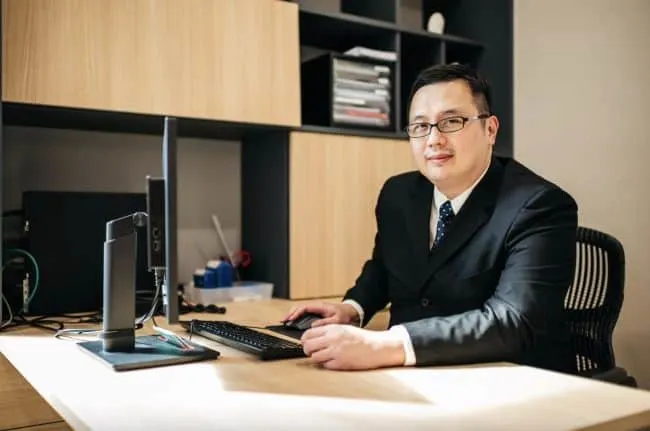
If persistent knee pain is dictating your life, limiting your favourite activities, or making simple movements a daily struggle, you are likely searching for a solution that goes beyond basic relief. Finding the right orthopaedic doctor in Singapore is the first step back towards mobility and comfort.
Dr Yong Ren is an orthopaedic surgeon trained at NUS who went on to specialise in complex trauma, pelvic and spinal surgery through advanced training at Inselspital in Bern, Switzerland. During his time at Khoo Teck Puat Hospital, he led the orthopaedic trauma service and continues to serve as a Visiting Consultant.
While experienced across a wide range of orthopaedic procedures, he has developed a particular focus on knee conditions and knee surgery. His background in minimally invasive fracture work, joint reconstruction and lower-limb biomechanics gives him a strong foundation for managing knee pain, sports injuries and degenerative knee conditions.
Alongside his clinical work, he has been active in education as a former Assistant Professor at the Yong Loo Lin School of Medicine and a trainer for orthopaedic residents and young surgeons. He combines deep surgical expertise with a calm, patient-centred approach to help patients regain strength, mobility and confidence in their knees.
MBBS (Singapore)
MMed (Orthopaedic)
FRCSed (Orthopaedic)
Orthopaedic (Hip & Knee) with special interest in Spine & Fracture Surgery
Fellowship of the Royal College of Surgeons (Edinburgh)
Member of Arbeitsgemeinschaft für Osteosynthesefragen (AO) Trauma International
Member of Singapore Medical Association
An orthopaedic doctor is far more than a “bone doctor.” They are medical specialists dedicated to diagnosing, treating, rehabilitating, and preventing injuries and diseases of the body’s musculoskeletal system. This intricate system is what allows you to move, work, and stay active. Understanding the scope of this specialty is essential when seeking help for your pain or injury.
Orthopaedic medicine, sometimes referred to as musculoskeletal medicine, focuses on every element necessary for movement. At The Orthopaedic Pain & Practice, our scope is wide-ranging, yet deeply focused on providing expert, tailored care.
Determining if your symptoms warrant a specialist consultation can save valuable time and prevent a condition from worsening. You should arrange a consultation when:
While a pain specialist might manage chronic nerve-related pain, an orthopaedic doctor is essential when the source of discomfort is structural—a damaged joint, a torn ligament, or a bone issue. Our specialists can determine the precise structural origin and recommend the most effective intervention.
The path to becoming a trusted orthopaedic specialist is lengthy and rigorous, ensuring the highest standard of care in Singapore. Dr Yong Ren’s qualifications exemplify this commitment to excellence:
The musculoskeletal system is constantly under stress, making orthopaedic conditions a pervasive health concern. At TOPP, we use a patient-centric approach to manage a wide spectrum of issues, focusing on restoring function and alleviating discomfort.
A Knee Pain Specialist is critical for some of the most common ailments affecting active Singaporeans. We routinely manage conditions across all major joints:
Yes, the majority of arthritis types that affect the joints’ mechanics, particularly osteoarthritis and certain forms of inflammatory arthritis, are managed by an orthopaedic doctor or surgeon.
If you are wondering what is considered an orthopaedic issue, the presence of certain symptoms is a clear signal to consult a specialist. Do not ignore persistent signals from your body.
| Symptom Pattern | What It Might Indicate | Specialist Action |
|---|---|---|
|
Swelling or Bruising |
Inflammation, ligament damage, or trauma. |
Imaging (X-ray/MRI) and structural assessment. |
|
Progressive Joint Stiffness |
Early-stage arthritis or chronic inflammation. |
Range-of-motion testing and joint fluid analysis. |
|
Instability or “Locking” |
Ligamentous laxity or meniscal/cartilage damage (common in knee pain). |
Physical examination and arthroscopic planning. |
|
Pain at Rest |
Advanced degeneration, severe inflammation, or nerve impingement. |
Detailed diagnostic workup and pain management. |
Pain that lasts longer than 48 hours following a minor injury, or chronic pain that limits work or social activity, strongly warrants an orthopaedic consultation.
A broken bone that has pierced the skin, risking severe infection.
Extremely painful swelling within a closed muscle compartment that cuts off blood supply.
A joint (e.g., hip or elbow) that remains dislocated and cannot be gently realigned.
Fractures or dislocations causing an immediate loss of sensation, motor function, or pulse in a limb.
Trauma from a heavy impact that causes extensive damage to multiple structures (bone, muscle, tissue).

General Orthopaedic Questions
While nerve-specific pain is often managed by a neurologist or pain specialist, an orthopaedic doctor plays a direct role when nerve damage is caused by a structural issue. For example, a slipped disc (herniated disc) in the spine that is physically pinching a nerve (like the sciatic nerve) is an orthopaedic condition requiring surgical or non-surgical intervention to relieve the pressure on the nerve.
Orthopaedic pain is primarily musculoskeletal—it originates from the bones, joints, ligaments, tendons, or muscles. It is often described as a dull ache, a sharp, shooting sensation upon movement, or deep joint pain. This contrasts with visceral pain (originating from internal organs) or neuropathic pain (pain directly from damaged nerves).
Diagnosis involves a thorough and methodical process:
Specialised Tests: Including blood tests for inflammatory conditions (like rheumatoid arthritis) or diagnostic injections to pinpoint the source of the pain.
Orthopaedics is divided into several subspecialties, reflecting the depth of expertise required for different body parts. These include: Spine, Joint Reconstruction (Hip and Knee), Sports Medicine, Hand and Upper Extremity, Foot and Ankle, and Trauma Surgery.
Any medical problem affecting the body’s locomotion and structure is an orthopaedic issue. This ranges from a simple bone fracture to a degenerative condition like advanced knee osteoarthritis.
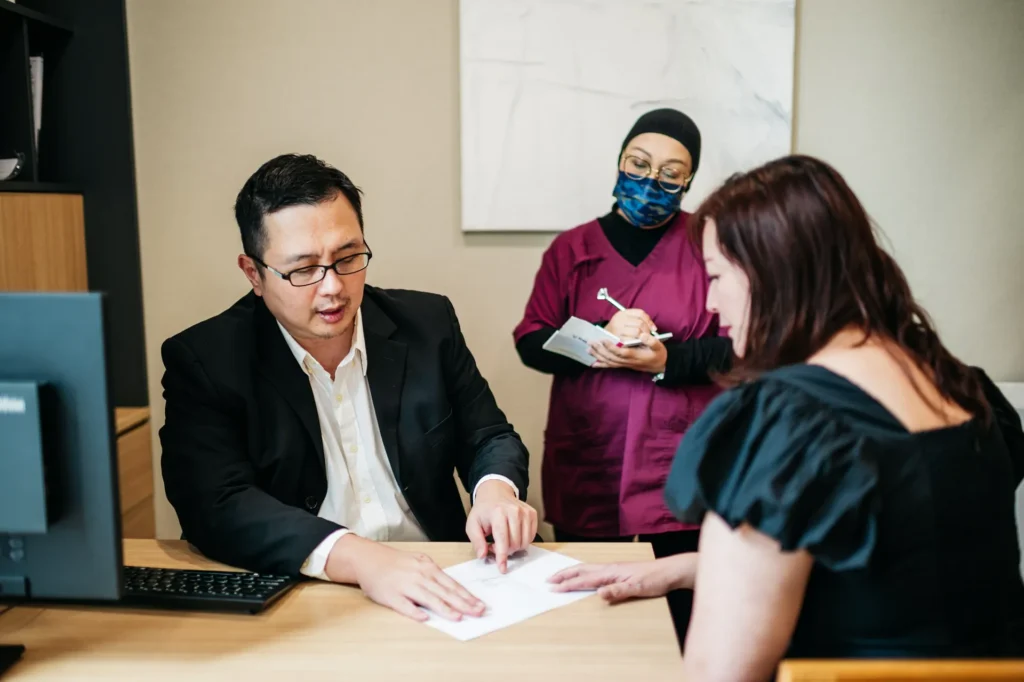
Dr Yong Ren brings extensive expertise to the field of minimally invasive orthopaedic procedures. His background includes specialist training in Switzerland, focusing on complex orthopaedic trauma and reconstruction, underscoring his capability in handling simple to highly complex joint issues.
Choosing us means you benefit from:
Dr Yong Ren’s practice prioritises the least invasive techniques, leading to smaller scars, less post-operative pain, and faster return to function.
We believe in treating the whole patient, not just the injury. This includes a full, multi-modal pathway from non-operative treatments (like physical therapy and injections) to the latest surgical techniques.
We provide clear, locally-relevant guidance on everything from the procedure itself to the intricacies of Medisave claimability and insurance processing in Singapore.
If you have been living with persistent pain, or if you have questions about your orthopaedic condition and wish to explore personalised, advanced treatment options, we encourage you to consult with Dr Yong Ren.
Take the first step toward a pain-free life with a $150 Knee Pain Consultation & X-ray.